Firewall Security Company India Complete Firewall Security Solutions Provider Company in India
AI Is Reshaping India’s Security Operations Centres – But Are Organisations Ready for What Comes Next?
https://etimg.etb2bimg.com/thumb/msid-134701278,imgsize-101578,width-1200,height=627,overlay-etciso,resizemode-75/brand-solution/ai-is-reshaping-indias-security-operations-centres-but-are-organisations-ready-for-what-comes-next.jpg
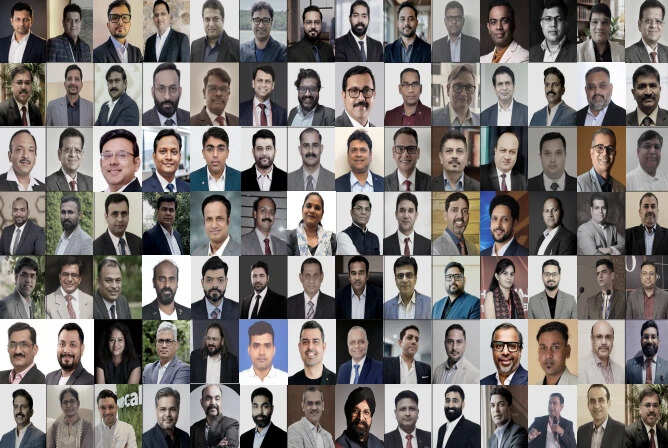
ETCISO, in association with SentinelOne, has launched Cyber Surakshit Bharat – Cyber Heroes 2.0, a Digital Coffee Table Book charting one of the most consequential shifts in India’s cybersecurity: the rise of AI-powered intelligence within the Security Operations Centre (SOC).
Narrated through the voices of the leaders driving this transformation, more than a publication, Cyber Heroes 2.0 captures how India’s SOCs are being radically reimagined, built on a comprehensive survey of over 100 CISOs and cybersecurity leaders across the country. The book reveals the delicate tension between speed and control, and automation and accountability.
“The conversation around AI in cybersecurity is moving from experimentation to execution. The real opportunity now is to use AI to improve the precision and speed of security operations, while putting the right governance and human oversight around autonomous action.”
— Diwakar Dayal, Managing Director & Area Vice President, India & SAARC, SentinelOne
The AI Inflection Point and the False Positive Paradox
AI adoption is rapidly becoming a reality across India’s cybersecurity operations, with 81% of surveyed CISOs actively deploying AI within their security operations. Of these, roughly 33% are already using AI in production for specific SOC tasks, while another 39% are currently piloting use cases to scale their defensive capabilities. The findings point to an industry moving beyond experimentation, with AI increasingly being tested and deployed across different stages of cybersecurity operations.
“We are at an inflection point where AI in cybersecurity has moved from experimentation to expectation. While adoption is accelerating, the real battle is shifting toward precision reducing false positives and driving meaningful automation.”
— Dr. Durga Prasad Dube, EVP & CISO, Reliance Industries
But as AI adoption accelerates, security teams are still grappling with a fundamental operational challenge: separating meaningful threats from noise. The survey finds that 27% of CISOs identify overwhelming false positives as their most pressing pain point, slowing response times and making it harder for teams to surface real threats. This challenge is further compounded by tool sprawl, with 69% of organisations juggling more than ten detection and response tools. Together, these findings point to a growing need for greater precision and AI-driven intelligence within the SOC — not simply more tools, but the ability to identify, prioritise and act on the threats that matter.
Bridging the Governance Gap to Safeguard Trust
At the same time, the growing concern around sensitive data exposure highlights a critical governance gap that organisations must urgently address. Governance remains heavily a work in progress across Indian enterprises, with 78% of security leaders fearing sensitive data exposure through AI systems, yet a mere 16% having implemented prompt-level controls. While Data Loss Prevention (DLP) is used by 30% of organizations as a default shield, only 7% currently have prompt or data inspection controls in place for their AI tools.
“I would recommend entities not to automate broadly, but deeply with appropriate thresholds and human in the loop, when required. Capabilities and controls should not outpace each other; insist on designated ownership, audit trails, and defined rollback criteria.”
— Rajesh Thapar, CISO, NSE India
Despite the hype surrounding autonomous AI agents, a massive 79% of CISOs still require human approval or guardrails before allowing AI to act independently, ensuring accountability remains firmly in human hands.
“Cybersecurity is not just about protecting systems; it’s about safeguarding trust, resilience, and the future of any information system. Through the adoption of AI capabilities in our SOC operations, we have to strengthen threat detection, accelerate response, build more proactive security postures, and align with the vision of Cyber Surakshit Bharat.”
— Jimit Gandhi, CISO, Akasa Air
Ultimately, Cyber Heroes 2.0 cuts through the AI hype to highlight the gap between technological ambition and organisational readiness. The enterprise SOC has not fully solved the AI puzzle yet, but the findings point to what comes next: greater precision in identifying and responding to threats, stronger governance as AI becomes more deeply embedded in security operations, and carefully governed autonomy that enables AI to act without compromising accountability. For India’s cyber defenders, the next phase of the AI-powered SOC will not simply be about adopting AI, but about making it more precise, controlled and capable of acting at scale.
Note: This article is a part of ETCISO’s Brand connect Initiative.