Firewall Security Company India Complete Firewall Security Solutions Provider Company in India
Introduction of Firewall in Computer Network
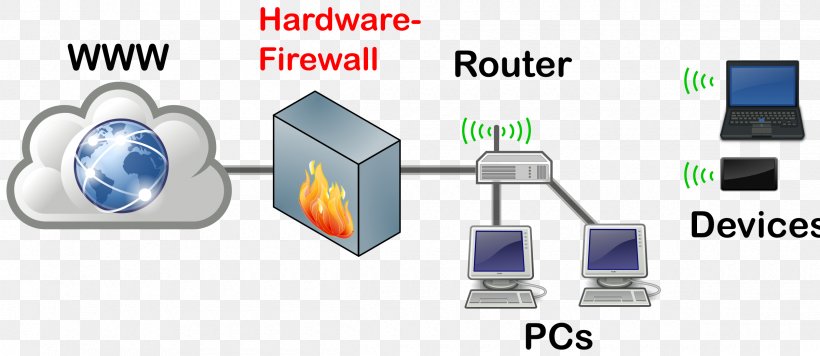
A Firewall is a network security system, available as hardware or software, that monitors and controls incoming and outgoing traffic based on predefined rules. It acts like a security guard, filtering data packets to either:
- Accept: Allow the traffic.
- Reject: Block with an error response.
- Drop: Block silently without response.
-
Importance
- Prevent Unauthorized Access: Like a locked door with a guard, only trusted users and traffic are allowed through.
- Block Malicious Traffic: Harmful data such as viruses, phishing attempts, or denial-of-service (DoS) attacks are stopped before reaching the system.
- Protect Sensitive Information: Safeguards personal and business data from theft or accidental leaks.
- Control Network Usage: Enforces policies such as parental controls, workplace restrictions, or government filtering.
- Mitigate Insider Risks: Detects suspicious applications or data exfiltration attempts from within the network.
Working of Firewall
A firewall inspects all incoming and outgoing traffic and decide whether to allow or block it.
- All data packets entering or leaving the network must first pass through the firewall.
- The firewall examines each packet against predefined security rules set by the organization.
- If the packet matches safe rules, it is allowed; if it is suspicious, blacklisted, or contains malicious content, it is blocked.
- Blocked or unusual traffic is recorded in logs, and real-time alerts may be generated for serious threats.
- Since it is not possible to define every rule, the firewall applies a default policy (accept, reject, or drop). Setting the default policy to drop or reject is considered best practice to prevent unauthorized access.
Default Policy: A firewall needs a default action (accept, reject, or drop) for traffic not covered by rules. For example, if no rule exists for SSH, the default applies. To prevent unauthorized access, it is best set to drop or reject.
Types of Firewall
Firewalls can be categorized based on their generation.
1. Network Placement
- Packet Filtering Firewall
- Stateful Inspection Firewall
- Proxy Firewall (Application Level)
- Circuit-Level Gateway
- Web Application Firewall (WAF)
- Next-Generation Firewall (NGFW)
2. Systems Protected
- Network Firewall
- Host-Based Firewall
3. Data Filtering Method
- Perimeter Firewall
- Internal Firewall
- Distributed Firewall
4. Form Factors
- Hardware Firewall
- Software Firewall
Firewall definition: What is a network firewall?
A firewall is a network security device designed to monitor, filter, and control incoming and outgoing network traffic based on predetermined security rules. The primary purpose of a firewall is to establish a barrier between a trusted internal network and untrusted external networks.
Firewalls come in both hardware and software forms, and they work by inspecting data packets and determining whether to allow or block them based on a set of rules. Organizations can configure these rules to permit or deny traffic based on various criteria, such as source and destination IP addresses, port numbers, and protocol type.
Understanding firewalls and network security
Firewalls are the bedrock of network security, shielding the network from unauthorized access. They prevent bad actors — hackers, bots, and other threats — from overloading or infiltrating a private network to steal sensitive data.
Traditionally, firewalls regulate traffic by forming a secure perimeter around a network or computer. This prevents anyone from accessing network resources if they aren’t authorized to do so. Without this protection, virtually anybody could enter and do as they please.
Today’s cybersecurity landscape demands a layered approach. While firewalls remain a cornerstone of network defense, advanced threats require additional security measures. The rise of cloud computing and hybrid work environments further highlights the need for comprehensive security solutions.
Fortunately, cutting-edge firewall technologies with AI-powered services are bringing network security up to speed. Combining the strengths of traditional tools with the innovative capabilities of new solutions, modern firewall vendors help organizations defend against even the most complex attack strategies.
What does a firewall do?
Firewalls protect against malicious traffic. They’re strategically positioned at the network edge or in a data center, allowing them to closely monitor anything attempting to cross this boundary.
This visibility also allows a network firewall to granularly inspect and authenticate data packets in real time. This involves checking the data packet against predefined criteria to determine whether it poses a threat. If it fails to meet the criteria, the firewall blocks it from entering or leaving the network.
Firewalls regulate both inbound and outbound traffic, protecting the network from:
External threats such as viruses, backdoors, phishing emails, and denial-of-service (DoS) attacks. Firewalls filter incoming traffic flows, preventing unauthorized access to sensitive data and thwarting potential malware infections.
Insider threats like known bad actors or risky applications. A firewall can enforce rules and policies to restrict certain types of outgoing traffic, which helps identify suspicious activity and mitigate data exfiltration. These capabilities highlight the core benefits of firewall in reducing attack surface and strengthening overall network security.
Firewall vs antivirus explained
What’s the difference between firewall and antivirus software? Firewalls focus on controlling network traffic and preventing unauthorized access. They’re designed to protect networks from unauthorized access and malicious traffic.
To understand how this differs from application-focused security controls, explore WAF vs firewall — a direct comparison between web application firewalls and network firewalls.
By contrast, antivirus programs target and eliminate threats at the device level. More specifically, their key differences include:
Scope: Antivirus software is primarily an endpoint solution, meaning it’s installed on an individual device. Firewalls mainly deploy at the network level, but some organizations install hosted firewalls directly on an endpoint for extra protection.
Functionality: Firewalls monitor traffic, blocking malicious data before it enters the network (or endpoint). Antivirus tools scan the local environment for signs of malware, ransomware, and other infectious attacks.
Enterprises normally deploy both firewalls and antivirus programs. As complementary solutions, they each provide essential protective layers for safeguarding business assets.
Firewall functions: NAT and VPN
Network Address Translation (NAT) and Virtual Private Network (VPN) are two distinct technologies, each with its own set of functions related to network security and connectivity. While NAT is primarily associated with address translation for routing purposes, VPNs are used to create secure, encrypted connections over the internet.
NAT
NAT changes the destination or source addresses of data packets as they pass through a firewall. This allows multiple devices to connect to the internet using the same IP address, which helps protect the private network from direct exposure to external threats.
In an office environment, each employee uses their own computer or mobile device to access the internet for browsing, emailing, and accessing cloud services. Despite each device having its own private IP address within the company’s internal network, all outbound traffic appears to external networks as originating from the same public IP address assigned to the company. As a result, it’s harder for potential attackers to identify and target individual devices.
VPN
A VPN is a type of proxy server. Therefore, it serves as a barrier between a computer or network and the internet, receiving all web requests before forwarding them to the network.
VPNs are common and extend the private network across a public one, such as the internet. This allows users to securely transmit data as if their devices were directly connected to the private network. The connection establishes an encrypted tunnel between remote devices and the corporate network, enabling secure access.
This function is especially useful in a hybrid environment. Remote employees can leverage VPNs to access corporate networks and critical applications regardless of where or how they’re working.
Firewall Types
Firewalls have evolved through four distinct phases:
First-generation firewalls began in 1989 with the packet filtering approach. These firewalls examine individual data packets, making decisions to allow or block them based on predefined rules. However, these were unable to identify if those packets contained malicious code (i.e., malware).
Second-generation firewalls began in the early 2000s. Otherwise known as stateful firewalls, these track the state of active connections. By observing network traffic, they use context to identify and act on suspicious behavior. Unfortunately, this generation also has its limitations.
Third-generation firewalls emerged in the latter half of the early 2000s. Often called proxy firewalls or application-level gateways, these act as intermediaries between a client and server, forwarding requests and filtering responses.
Fourth-generation firewall, also known as next-generation firewall (NGFW), started in 2010. NGFWs combine traditional capabilities with new, advanced features such as intrusion prevention (IPS), application-layer filtering, and advanced threat detection.
Although each generation improved upon the last, many earlier iterations are still in use today. Let’s review the benefits of each firewall in more detail.
Stateless Firewalls
Stateless firewalls
A stateless firewall protects the network by analyzing traffic in the transport layer protocol — the place where devices communicate with one another. Rather than store information about the state of the network connection, it inspects traffic on a packet-by-packet basis.
Then, it decides to block or allow the traffic based on the data located in the “packet header.” This may include source and destination IP addresses, port numbers, protocols, and other information. Altogether, this process is called packet filtering.
Despite being fast and inexpensive, stateless firewalls can be exposed to common network vulnerabilities. Critically, they have zero visibility into packet sequencing. That means they can’t detect illegitimate packets, which may contain attack vectors or not have a corresponding request. For a deeper understanding of how stateless and stateful filtering approaches differ, explore our guide on the stateful vs stateless firewall differences.
Likewise, they only have insight into the packet header — not its actual contents. This makes it impossible for a stateless firewall to detect malware hidden within a packet’s payload.
stateful firewall pros and cons
Statefull firewalls
Stateful firewalls track the most recent or immediate status of active connections. Monitoring the state and context of network communications can help identify threats based on more insightful information.
For example, state-aware firewalls block or allow traffic by analyzing where it’s coming from, where it’s going, and the contents of its data packets. Moreover, they evaluate the behavior of data packets and network connections, cataloging patterns and using this information to improve future threat detection.
This approach offers more protection compared to packet filtering but takes a greater toll on network performance because it conducts a more in-depth analysis. Worse yet, attackers can trick stateful inspection firewalls into letting harmful connections sneak through. They exploit network rules and send malicious packets using protocols the firewall believes to be safe.
Application-level gateways
Application-level gateways, or proxy firewalls, act as an intermediary between internal and external systems. Notably, they operate at Layer 7 of the Open Systems Interconnection (OSI) model — the application layer. As the closest layer to the end-user, Layer 7 applications include web browsers, email clients, and instant messaging tools.
Proxy firewalls intercept and analyze all incoming and outgoing traffic, applying granular security policies to control access and protect the network. They offer packet filtering, application-level inspection, URL filtering, and more.
Next-generation firewall
Next-Generation Firewall (NGFW)
NGFWs protect businesses against emerging cyber threats. They blend all the best parts of past firewall technologies with the advanced capabilities required to mitigate modern cyberattacks. For example, these include:
Deep packet inspection (DPI), a method of examining the contents of data packets as they pass through network checkpoints. DPI analyzes a larger range of information, allowing it to find otherwise hidden threats.
Intrusion prevention (IPS), a system that monitors traffic in real time to proactively identify threats and automate response.
Data loss prevention (DLP), a cybersecurity solution that blocks intentional and accidental data disclosures.
NGFWs combine the protection of previous generations with the advanced security capabilities mentioned above. They can be deployed as software or hardware and can scale to any location: remote office, branch, campus, data center, and cloud. This includes mission-critical OT environments where deploying a rugged firewall ensures reliable protection against extreme environmental challenges. NGFWs can simplify, unify, and automate enterprise-grade protection with centralized management that extends across distributed environments. These capabilities include:
Internet of Things (IoT) security to discover BYOD, rogue, or shadow IT devices.
Network sandboxing to monitor and analyze suspicious objects in an isolated environment
Zero-trust network access (ZTNA) to manage network access to users and applications based on identity and context, supported by firewall-based Zero Trust controls that enforce identity-driven traffic inspection and secure segmentation across distributed environments.
Operational technology (OT) security to protect OT environments with cyber threat intelligence platform, IPS, and SCADA applications and threat inspection
Domain name system (DNS) security to monitor, detect and prevent capabilities against DNS layer attacks
Software-defined wide-area network (SD-WAN) architecture to deliver dynamic path selection, based on business or application policy, centralized policy and management of appliances, virtual private network (VPN), and zero-touch configuration.
Firewall trends: Hybrid mesh firewall
Hybrid Mesh Firewall Use Cases
Hybrid mesh firewalls are emerging as the next frontier of network security. In brief, a hybrid mesh firewall is a security platform that provides centralized and unified management by combining the benefits of multiple firewall architectures. It simplifies cybersecurity operations and coordinates policies across firewalls of all form factors to create a comprehensive security posture.
With the rise of work-from-anywhere, employees are more distributed than ever before. And, to accommodate remote work setups, organizations have greatly accelerated their digital transformations. They’ve adopted hybrid cloud environments, stretching the network edge far past its former perimeter. Between cloud services, data centers, branch offices, and remote deployments, managing network traffic is exponentially more difficult.
Adding to the mix is the fact that enterprise attack surfaces are quickly expanding. Whether it be remote employees accessing corporate resources on unmanaged devices or a disjointed array of point solutions and cloud applications, every new connection is another potential entry point bad actors can exploit. And, at a time when organizations are facing a significant cybersecurity skills gap, hackers only grow more sophisticated.
Network complexity slowing digital initiatives
In turn, organizations must find a way to unify their cybersecurity approach and simplify risk management.
Why hybrid mesh firewall?
By simplifying cybersecurity operations and coordinating security policies across all firewalls, hybrid mesh firewalls create a comprehensive security posture that is ideal to secure distributed network environments.
According to Gartner, hybrid mesh firewall platforms address the growing complexity of implementing and managing firewalls across multiple use cases. Hybrid mesh firewalls offer mature, cloud-based, unified management with automation and orchestration capabilities. Features such as application connectivity mapping, visibility into cloud-native network security policies, policy fine-tuning, and recommendations facilitate the administration of all firewall complaints across hybrid environments. Integration with overlapping technologies such as microsegmentation and SASE provide mature visibility and risk management capabilities.
A hybrid mesh architecture spans distributed network environments unifying operations, security, and management of multi-deployment firewalls including hardware and virtual appliances, cloud-based, and as-a-service form factors. One of the most critical capabilities of an NGFW is to simplify the management of these dispersed network firewalls with consistent security across complex, hybrid environments.
Hybrid mesh firewalls include multiple form factors, such as:
Virtual firewalls: Software-based firewalls that run on virtualized infrastructure, such as hypervisors or cloud platforms. Protect virtualized environments and can be moved between clouds. Critically, they’re flexible by nature, allowing organizations to deploy them to various public or private clouds.
Cloud-native firewalls: Firewalls specifically created to operate in particular cloud environments. They’re often tightly integrated with cloud service providers like Amazon Web Services, Azure, and Google Cloud. This reduces the workload for network security teams, as it eliminates the need to configure and maintain the software infrastructure.
Firewall-as-a-service (FWaaS): A deployment model where vendors deliver the firewall solution as a cloud-based service. This makes it easy to scale across a growing network infrastructure and is easily configured to match an enterprise’s unique security needs.
As network risk management becomes more complex, hybrid mesh firewalls stand to level the playing field for enterprises by unifying operations, security, and management across distributed network environments.
What to look for in a firewall solution
Next-generation firewalls (NGFWs) serve as gatekeepers to safeguard an organization’s compute resources with secure networking, advanced threat inspection and detection, and web filtering. Hybrid working models and the rapid adoption of cloud services are forcing network security to evolve to give enterprises complete visibility and control across the entire distributed infrastructure.
When evaluating NGFW solutions, potential trade-offs between security and performance may be top of mind. The ability to provide consistent and consolidated security protection across all distributed edges with minimal performance impact is critical. Considering Firewall end of life into firewall selection criteria ensures platforms remain supported, scalable, and aligned with long-term enterprise architecture goals rather than introducing future migration risk.
6 Criteria for evaluating NGFWs for high-performance security
1. Integrated AI-powered security services. NGFWs that are tightly integrated with AI-powered security services provide real-time threat intelligence with multi-layered security that includes network intrusion prevention, malware scanning, and web filtering for comprehensive protection.
AI-powered security services complement traditional firewall capabilities with proactive threat detection against evolving threats including machine learning. This reduces the workload for security teams, improves security efficiency and resource allocation, and streamlines security management for better decision making.
Machine learning can analyze vast amounts of data to identify anomalous patterns that might indicate malicious activity. This enables the NGFW to dynamically adapt security policies based on real-time network traffic analysis. This ensures that relevant and effective security measures are applied, reducing the risk of cyberattacks.
2. Threat protection performance. Threat protection performance is a measurement of how well an NGFW performs while running full threat protection, including firewalling, intrusion prevention, antivirus, and application control. It is critical for the NGFW to sustain high performance when full threat protection is turned on.
Many NGFW providers are ambiguous about how they represent their threat protection performance claims. Documented performance claims should be examined carefully to ensure they reflect testing under load, with threat protection fully engaged.
3. Single-pane-of-glass management. The management interface is where many security architects are stymied in their selection process. Careful attention may have been paid to the management system’s user interface and functionality, but if it is limited to the NGFW, security teams will have to toggle between multiple dashboards to assess vulnerabilities and respond to threats. End-to-end visibility and control are possible only if the NGFW is part of a broad, integrated security architecture, across which it can share threat information with other network devices and receive threat intelligence automatically.
Single-pane-of-glass management is more effective from a security standpoint and is operationally more efficient, reducing administrative time and training costs.
4. Ensure a broader security strategy. The hybrid workforce has forever changed the cybersecurity landscape. In addition, organizations have distributed offices that depend on redundant WAN connections and organizations now require additional security solutions like SD-WAN, Zero Trust Network Access (ZTNA) and Secure Access Service Edge (SASE).
Many NFGW vendors have add-on SD-WAN, SASE, and ZTNA features to allow organizations with branch offices to build highly available and high-performance networks. However, these offers are not ideal. Look for a vendor that offers fully integrated secure SD-WAN, SASE, and ZTNA capabilities in NGFWs that help consolidate their point products and enforce centralized control. This reduces overall investment costs, while eliminating security gaps.
5. Price/performance and other operational considerations. Some vendors scale performance by increasing the size, and consequently, the price of their NGFWs. This may not align with enterprise trends toward shrinking technology footprints. Aim for an NGFW that delivers the required performance in the most compact form factor. This not only reduces total cost of ownership (TCO) but it also saves space and reduces energy consumption—both important objectives for environmentally conscious enterprises.
Maintenance and support costs for the NGFW should be factored into TCO, too. Mature technology has an edge in this respect, as does an offering from a vendor with deep investments in research and design. Owners of NGFWs that fall into this category can expect smoother deployments and fewer support calls.
When considering the NGFW hardware, pay attention to power redundancy and support for 40 GbE and 100 GbE network interfaces. These will support resiliency and accommodate migration to higher-capacity networks.
6. Independent third-party validation. Although network security is a rapidly evolving industry, no enterprise can afford the risk of untested security innovations. Architects should not rely on vendor claims alone but seek third-party evaluation from recognized testing houses such as CyberRatings.org.
Choosing your firewall deployment use cases
When choosing a firewall, consider the use case. Are you securing a branch office or ATM, a data center, or your headquarters on campus? Do you need to protect your network with work-from-anywhere access for remote users? Will your users need to access applications on multiple clouds? Do you need network segmentation to safeguard assets?
Branch – Protect and connect small offices or ATMs with AI/ML powered security and convergence with secure SD-WAN. Firewalls provide a first line of defense by protecting branch locations from unauthorized access, malicious traffic, and cyber threats with secure network operations, data integrity, and compliance with security policies.
Campus – Gain visibility and protection of enterprise headquarters with the ability to manage applications, users, devices, and access from a single dashboard. Firewalls provide campus networks with a multi-layered defense against cyber threats, ensure secure network operations, and enable compliance with security policies.
Data Center – Deploy hyperscale security with consistent, coordinated protection, rich interfaces, and decryption that scales to any environment. Firewalls act as a sophisticated security shield to control network traffic flow, identify and mitigate threats, enforce security policies, to protect critical IT infrastructure and sensitive data.
Segmentation – Protect your assets with rich macro- and micro-segmentation. By segmenting the network to isolate potential threats, create secure zones, and scale as needed, firewalls cater to the specific needs of larger and more complex network environments.
Multicloud – Integrate public and private cloud protection with easy-to-manage automation from a single console. Firewalls play secure remote work environments to protect sensitive data stored or accessed remotely by safeguarding access points, mitigating cyber threats, and controlling network traffic with centralized management.
Remote – Extend protection with converged networking and security services. Firewall-as-a-service, a component of a secure access service edge (SASE) cloud-native architecture extends security across hybrid work environments to protect data and applications with centralized management and advanced threat protection.